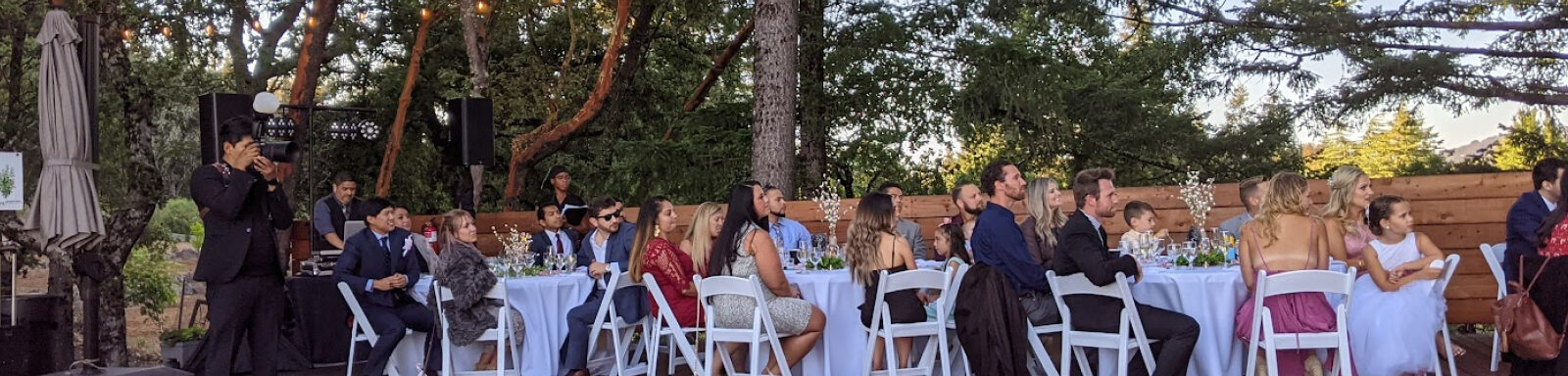
Most people planning a company offsite have never planned one before. Somebody senior said "we should get out of the office," and it landed on their desk, usually on top of their actual job.
We host these regularly, which means we hear the same questions from smart, busy people who are slightly bluffing. Here are the answers, including the ones that cost us money to give honestly.
Shape and length
How long should a corporate retreat be?
For most teams, one full day beats two. This is the answer people least expect and it is the one we are most confident about.
A single day forces a real agenda. Two days invites filler, and filler is what teams remember with a wince. Two days also multiplies the cost, requires hotel rooms, and doubles the number of people who cannot make it because of childcare or travel.
Two days genuinely earns its place in three situations: a newly merged or newly hired team that has never met in person, a strategy cycle where day two exists to decide what day one surfaced, or a distributed team flying in from several time zones, where a single day burns most of itself in travel.
If this is your first offsite with this team, do one day. You will learn more about what your team needs from one honest day than from two speculative ones.
Do we need an overnight?
Usually no, and it changes the budget more than any other decision.
An overnight adds lodging, dinner, breakfast, evening programming, and a set of logistics that will absorb your attention right when it should be on the content. It also cuts attendance, because the people who cannot do an overnight are disproportionately the parents and carers on your team.
At Living Well nobody stays on the property. We do host multi-day events, with each day booked as its own separate rental, and teams that want an overnight book a hotel nearby. On the Scotts Valley side that is the Best Western Plus Inn at 6.6 miles, the Four Points by Sheraton at 7 miles, or the Hilton at 9 miles. On the Los Gatos side, the Toll House Hotel at 7.5 miles or Hotel Los Gatos at 8.
How many people is the right size?
Small enough that one conversation can include everyone, which in practice means somewhere between about twelve and forty for a working retreat.
Below about eight it is a long meeting rather than an offsite. Above about fifty you are running an event, with a stage and a schedule, and the intimacy that makes offsites worth the money is gone.
Our own hard limit is 80 guests. That is a firm cap, not a guideline, so if you are planning for more than 80 we will tell you straight away rather than after a tour.
What does a realistic one-day agenda look like?
Fewer things than you have planned. The single most common mistake is a schedule that would be ambitious for two days, crammed into one, with no breaks.
A shape that reliably works, using our standard 9:00 AM start:
- 9:00 to 9:45. Arrive, coffee, no content. People need to physically land. Do not schedule anything important here, because someone will hit traffic on Highway 17.
- 9:45 to 11:15. The hardest thinking of the day, while attention is at its best. This is where strategy goes, never after lunch.
- 11:15 to 12:15. Something outdoors. A walking pair discussion, or small groups on the deck. This is not a break, it is a different mode of working, and it is the block people quote back to you months later.
- 12:15 to 1:15. Lunch, outside if the weather allows.
- 1:15 to 2:30. Small groups on whatever the morning surfaced. Groups of three or four, because the after-lunch hour cannot support a whole-room discussion.
- 2:30 to 3:00. Decisions, owners, and dates. Out loud, written down, visible to everyone.
That lands in our Half Day block, which runs 9:00 AM to 3:00 PM. Teams that want a later wrap move to the Afternoon or Evening block instead.
What is the one thing that makes a retreat fail?
No decisions. Not a bad venue, not a weak facilitator, not the weather.
A retreat that generates energy and no decisions leaves everyone flat two weeks later, and it is why so many people privately think offsites are a waste. Protect the last thirty minutes of the day for decisions, owners, and dates, and defend that half hour against every overrun before it.
Budget
What does a corporate retreat venue cost near San Jose?
At Living Well the venue is priced on one thing only: how late in the day your booking runs. Not per person, not by event type.
Every block starts at 9:00 AM and you choose the end time:
| Block | Your day | Fri-Sun | Mon-Thu |
|---|---|---|---|
| Half Day | 9:00 AM to 3:00 PM | $4,500 | $3,500 |
| Afternoon | 9:00 AM to 6:00 PM | $5,500 | $4,500 |
| Evening | 9:00 AM to 9:00 PM | $6,500 | $5,500 |
Corporate offsites are almost always midweek, which means most land in the right-hand column. A standard 9:00 to 3:00 offsite on a Tuesday is $3,500 for exclusive use of the whole property, whether you bring twelve people or ninety. Event insurance is included on every booking. Everything else that has a price is published on our three booking blocks and what each one costs.
Budget separately for catering, which is your own vendor, and for anyone you bring in to facilitate.
Is a venue cheaper than a hotel conference package?
Often yes, and the comparison people run is usually the wrong one.
A hotel conference package looks cheap per head until you add the AV charges, the minimum food and beverage spend, and the corkage. But cost is not really the argument. We wrote about why teams escape the hotel conference room, and the short version is that a hotel meeting room is designed for turnover, which is precisely the opposite of what you want from a day meant to change how people think.
How far in advance should we book?
Six to ten weeks is comfortable for a weekday. Longer only if you need a Friday or Saturday, which is when we are busiest with weddings.
The real constraint is rarely the venue. It is your own team's calendar, and specifically the two or three people whose absence would make the day pointless. Find their dates first, then ask the venue. Doing it the other way around is how offsites end up missing the person the offsite was about.
The practical questions
What AV do we actually need to ask about?
Three things: the screen, the wifi, and the microphones. Ask about them specifically, because "full AV available" means nothing.
What we have:
- A large screen on a rolling cart, which can be moved to wherever the session is happening, indoors or out on the deck. A screen rather than a projected image, and that is deliberate: this property has heavy natural light and a lot of outdoor space, where a projected image washes out. The screen stays readable in daylight.
- High-speed wifi with a 5G backup. The backup exists because any single line can go down, and we would rather tell you that than promise perfection. Plan a hybrid all-hands or a livestream with that in mind and have a fallback.
- Wireless microphones and a Bose speaker system, included.
- Whiteboards and flip charts, available on site. Worth confirming when you book, because most venues expect you to bring your own and a session that needs a writing surface falls apart without one.
Bring your own laptop and your own adapters. Everyone forgets adapters.
Can we split into breakout groups, and where do they go?
Effectively as many simultaneous groups as you want, because the property is 4.5 acres and you have all of it to yourselves.
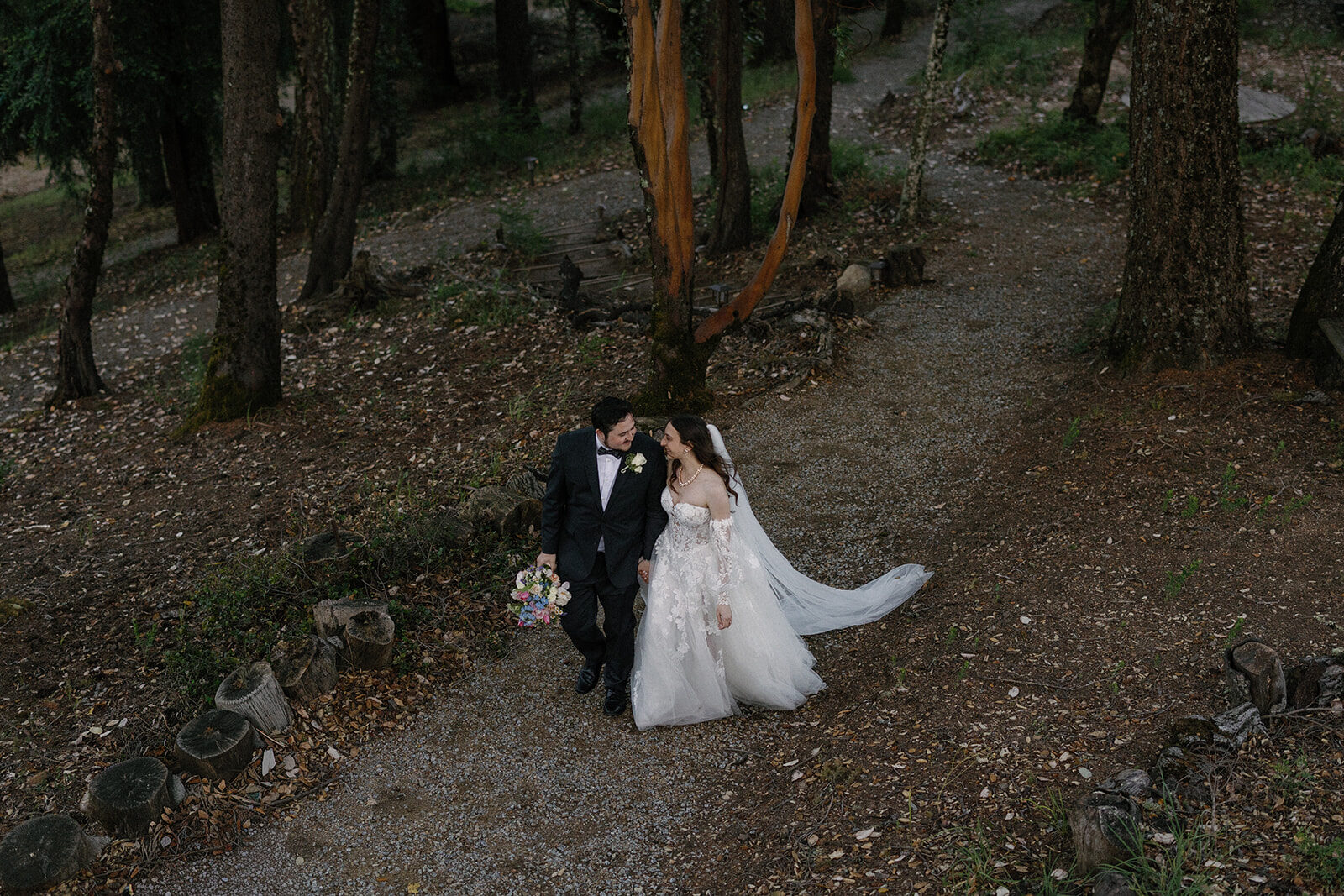
This is the quiet advantage of an outdoor venue over a conference floor. A hotel charges you per breakout room and gives you three. Here, groups simply walk in different directions: the deck, the forest paths, the seating areas, the orchard. Far enough apart that nobody overhears anybody, which is what actually determines whether a small group says anything real.
Indoors works too. There is private indoor space for several groups, so breakouts are not a fair-weather feature that quietly dies the moment it rains. That matters more than it sounds: plenty of venues sell you the outdoors and then have exactly one room when the weather turns.
Two practical notes. Give each group a specific landmark to head for rather than saying "spread out," because otherwise everyone drifts about thirty feet and stops. And name a return time out loud, since people genuinely lose track out there.
Whiteboards and flip charts are available if a group needs to capture something.
What about food?
You bring your own caterer, with no approved list and no restrictions.
Our kitchen has a large freezer, a full-sized refrigerator, a microwave, prep tables, and a sink. There is no stove or oven, so choose a caterer who delivers ready or finishes off site. Dining sets are $50 for a table with eight chairs, including setup, breakdown, and cleaning, with no delivery fee and no minimum. Linens are not provided.
One piece of unsolicited advice: eat outside if you possibly can. Lunch indoors under the same ceiling you have been in all morning is a wasted opportunity, and the difference in afternoon energy is not subtle.
What if it rains?
You move indoors, and the day keeps its shape. Every outdoor plan here has an indoor version, including the breakouts, since there is private indoor space for several groups. That is the actual question behind the question: not whether you will get wet, but whether your agenda survives.
November through March in California is not a weak season, it is a higher-variance one. We host beautiful outdoor events all winter. What changes is that the weather risk sits with you rather than with the calendar. Teams also bring in rented patio heaters, which turns "it might be cold" from a worry into a solved problem with a known cost.
If you are booking a winter date, take the tour. Standing in the indoor space and deciding you would be happy with it is what makes a winter plan feel solid instead of like a gamble.
How do people get there, and where do they park?
We are about 20 miles from San Jose Mineta International Airport and a short run up Highway 17 from San Jose, Campbell, Saratoga, and Cupertino.
- Parking on site for about 65 vehicles.
- Shuttles are welcome and come all the way up to drop off and collect, which is worth considering if your team is coming from one office or one hotel.
- Uber and Lyft both serve the property and come up to the door rather than stopping at the road.
- Cell service is good on the property and on the drive up.
Do we need a professional facilitator?
If the leader of the team is also the person who most needs to be heard on the day, then yes.
You cannot chair a discussion and be a full participant in it at the same time. Someone will get shortchanged, and it is usually the discussion. A facilitator does not need to be an expensive outside consultant, and can be a capable person from another team who owes you a favor.
If what you want is a session on how teams actually handle stress, focus, and reactivity, that is Patty's field rather than a general facilitator's. Patty Purpur de Vries teaches applied neuroscience to leadership teams, and you can read about Patty's neuroscience and wellness sessions for teams. Wellness retreat inquiries go straight to her at patty@livingwellusa.com rather than through the venue form.
How do we know whether it worked?
Check at thirty days, not on the day.
At the end of the retreat everyone feels great, which tells you nothing. The real measure is whether the decisions you wrote down are being acted on a month later, whether the owners you named still own them, and whether anyone has referred back to the day unprompted. If nothing survived thirty days, the problem was the last half hour of the agenda, not the venue.
Before you commit
Go and stand in the space. Bring the person who will actually run the day, not just the person booking it, because they notice different things.
You are welcome to book a site visit before you commit a budget. If you want the venue-selection side of this rather than the running-it side, start with what to look for in a corporate retreat venue near Silicon Valley.
For more on our corporate offsite and retreat space, including how teams use the grounds, see the corporate page. There is also the complete guide to Los Gatos corporate event venues if you are still comparing options.