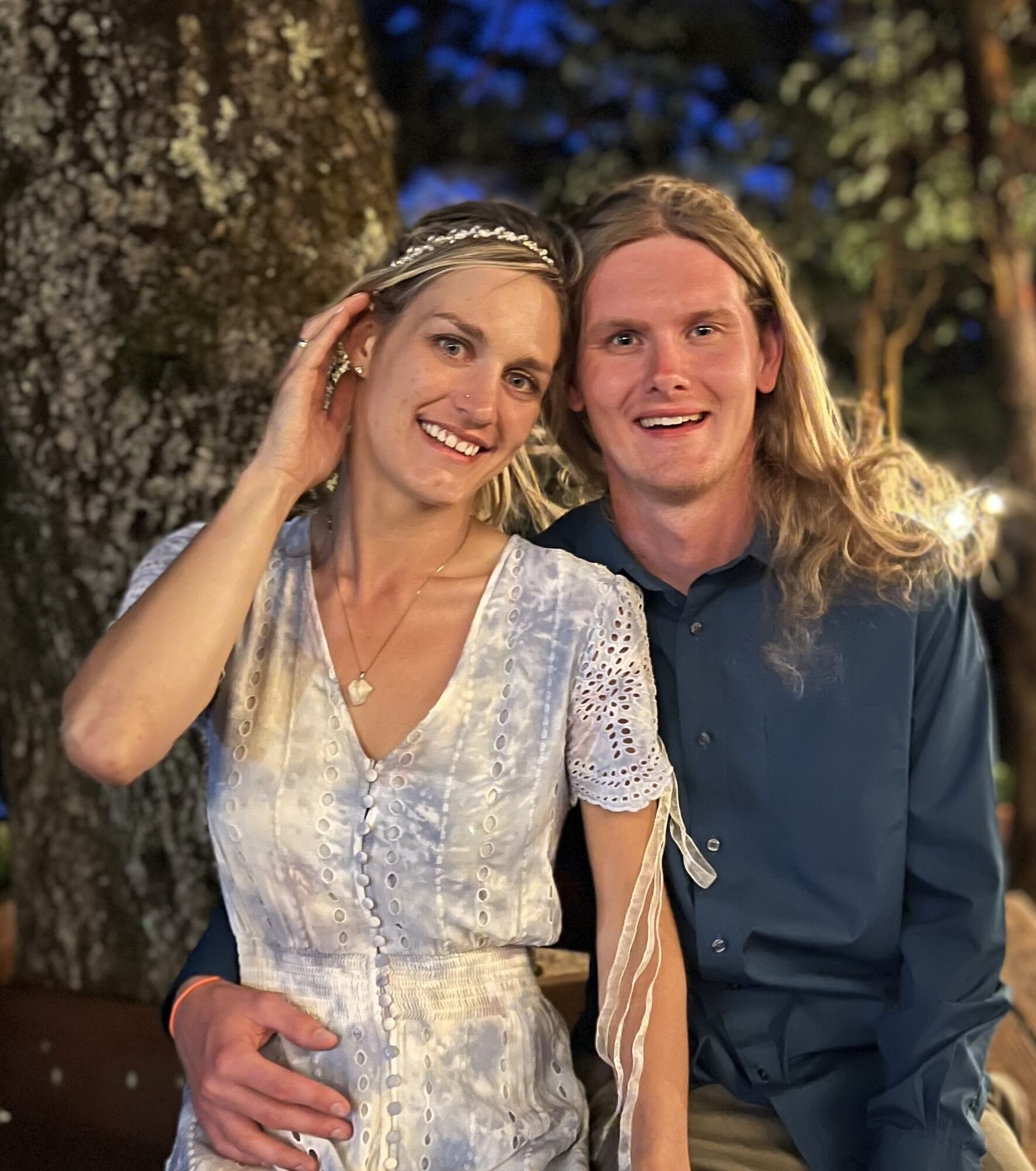
If you are an LGBTQ+ couple planning a wedding in the Bay Area, you have probably already had the experience of scanning a venue’s website for clues. Do the photos show only one kind of couple? Does the contract say “bride and groom”? Will the tour be awkward? It is exhausting to have to read between the lines before you can even ask about a date.
So let us be direct. Living Well Event Center welcomes LGBTQ+ couples. We have hosted several same-sex weddings on this property and we would be glad to host yours. There is no separate conversation, no different pricing, and nothing to explain when you arrive.
What follows is the practical part: how to evaluate a venue, how to shape a ceremony that fits you rather than a template, and what California actually requires. We hope it is useful whether or not you end up celebrating with us.
You Should Not Have to Audition for Your Own Wedding
Same-sex marriage has been legal in California since 2013 and nationwide since 2015. In November 2024, California voters passed Proposition 3, which put the right to marry directly into the state constitution and cleared away the dormant language of Proposition 8. Legally, the question is settled here.
Culturally, couples tell us the vetting still takes energy. The concern is rarely outright refusal. It is the smaller friction: a coordinator who keeps saying “the bride,” a planning template with two columns labeled by gender, a photographer who poses you in a way that does not feel like you. None of it is catastrophic. All of it adds up on a day that is supposed to be yours.
The good news is that the Bay Area has a deep bench of vendors who have done this many times. It is worth finding them.
Questions Worth Asking Any Venue
These are useful for filtering quickly, and the answers tend to be revealing.
“Have you hosted same-sex weddings before?”
A confident, specific yes is what you want. Hesitation, or a pivot to “we welcome everyone” without any examples, tells you something. Our answer is yes, several, and we are happy to talk about how they went.
“What language does your contract use?”
Ask to see it before you are emotionally invested. A contract that says “Client” and “Party A and Party B” costs a venue nothing and signals that someone thought about it.
“Who will actually be on site during our event?”
At larger venues, the person selling you the date is often not the person working your wedding. Ask who will be there and whether you will meet them beforehand. At Living Well, it is Greg and Patty, the same two people from your first tour through your last dance.
“Can we bring our own vendors?”
This matters more than it looks. If a venue locks you into an approved list, you inherit their vendor relationships, including any that have not thought carefully about serving LGBTQ+ couples. An open vendor policy lets you build your own team.
Ceremony Language and Traditions, On Your Terms
Most wedding traditions were built around assumptions that may or may not apply to you. Every one of them is optional, and adapting them is not a compromise. It is the whole point.
The processional
There is no rule that one person waits at the front while the other walks in. Some couples walk in together. Some each walk with their parents. Some have both partners enter from opposite sides and meet in the middle, which frames beautifully against the bay view here. Some skip the processional entirely and simply gather.
Wedding party structure
Mixed-gender wedding parties, shared parties standing together rather than split, or no wedding party at all are all common now. If you want your closest friend beside you regardless of which side tradition would assign them to, that is simply how it goes.
Vows and pronouncement
Your officiant should ask what you want to be called at the end. “I now pronounce you married,” “spouses for life,” “wives,” “husbands,” or your own phrasing. This is worth deciding early rather than in the moment.
Family dynamics
Some couples have families who have been enthusiastic from day one. Some are navigating something more complicated, including relatives who are present but uneasy, or absent altogether. A good officiant can help you write around it so the ceremony holds what is true without making the day about anyone’s discomfort. We have quietly handled seating, walk-ins, and toast order to keep a day feeling good. Just tell us in advance.
Officiants Who Will Use Your Words
Both Greg and Patty are ordained and available to officiate for $300. That includes a planning meeting in person, by phone, or over Zoom, help writing your vows, and assistance building your ceremony program.
If we officiate, we will ask what you want to be called, what language feels right, and what you would rather leave out. If you bring your own officiant, that is welcome too. Either way, nothing goes in the script that you have not seen.
A Note From Greg and Patty
We are the caretakers of this property, and we are on site for every event we host. Over the years we have married couples of many kinds here, and the pattern is always the same: the people who love them show up, the light comes through the redwoods, and it is a good day.
We are both ordained, and officiating a wedding is one of the real privileges of doing this work. If you are figuring out whether you would feel comfortable here, come walk the property. That tends to answer the question faster than a website can.
Practical Notes on California Marriage Licenses
The mechanics are the same for all couples in California. A few things are worth knowing early:
You can apply at any county clerk
A California marriage license issued by any county is valid anywhere in the state. You do not need to apply in the county where you are marrying. Santa Clara County and Santa Cruz County offices are both convenient to Los Gatos.
The license is valid for 90 days
Apply inside that window. If it lapses before your ceremony, you will need to reapply. Most couples handle it a few weeks out.
Public and confidential licenses differ on witnesses
A public license requires at least one witness to sign, and no more than two. A confidential license requires no witness, and is available to couples already living together. Which you choose is a personal call.
The officiant returns the license
Whoever solemnizes the marriage signs and returns the license to the county recorder within ten days. If we are officiating, we take care of it.
The above is general information, not legal advice. Requirements and fees can change, so confirm the current details with the county clerk’s office when you apply.
Living Well for LGBTQ+ Weddings
- Private 4.5-acre estate, exclusively yours for the day, no shared spaces
- Greg and Patty both ordained and available to officiate
- Bring any vendors you like, no approved-list restrictions
- Ceremony space, 2,000 sq ft redwood deck, orchard, waterfall, and fire pit
- Roughly 1,800 sq ft of indoor space and a full kitchen if the weather turns
- Up to 100 guests, pet friendly, ample on-site parking
- Event liability insurance included at no extra charge
- Wedding pricing from $2,500, based on how late your day runs rather than your guest count
- About 20 minutes from San Jose and 20 minutes from Santa Cruz
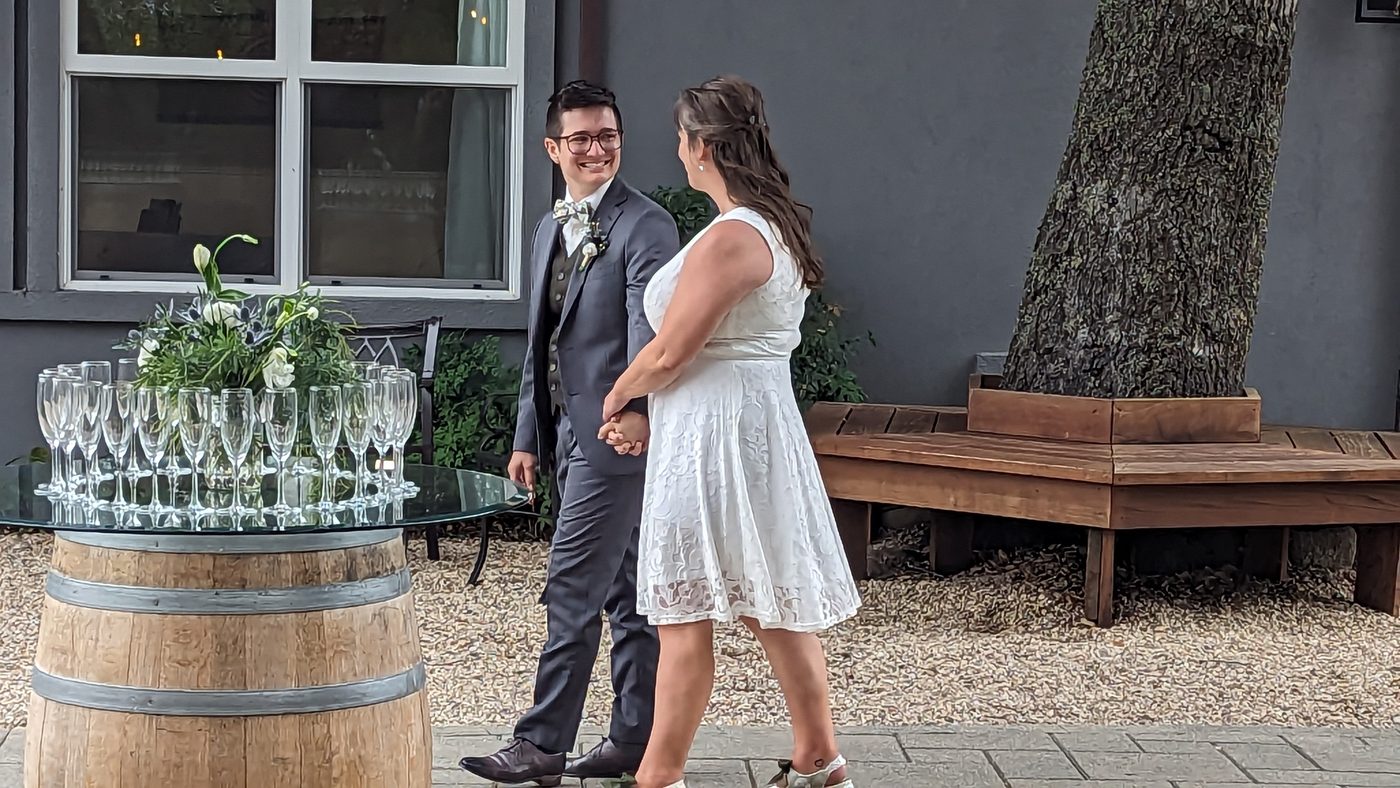
Celebrations at Living Well
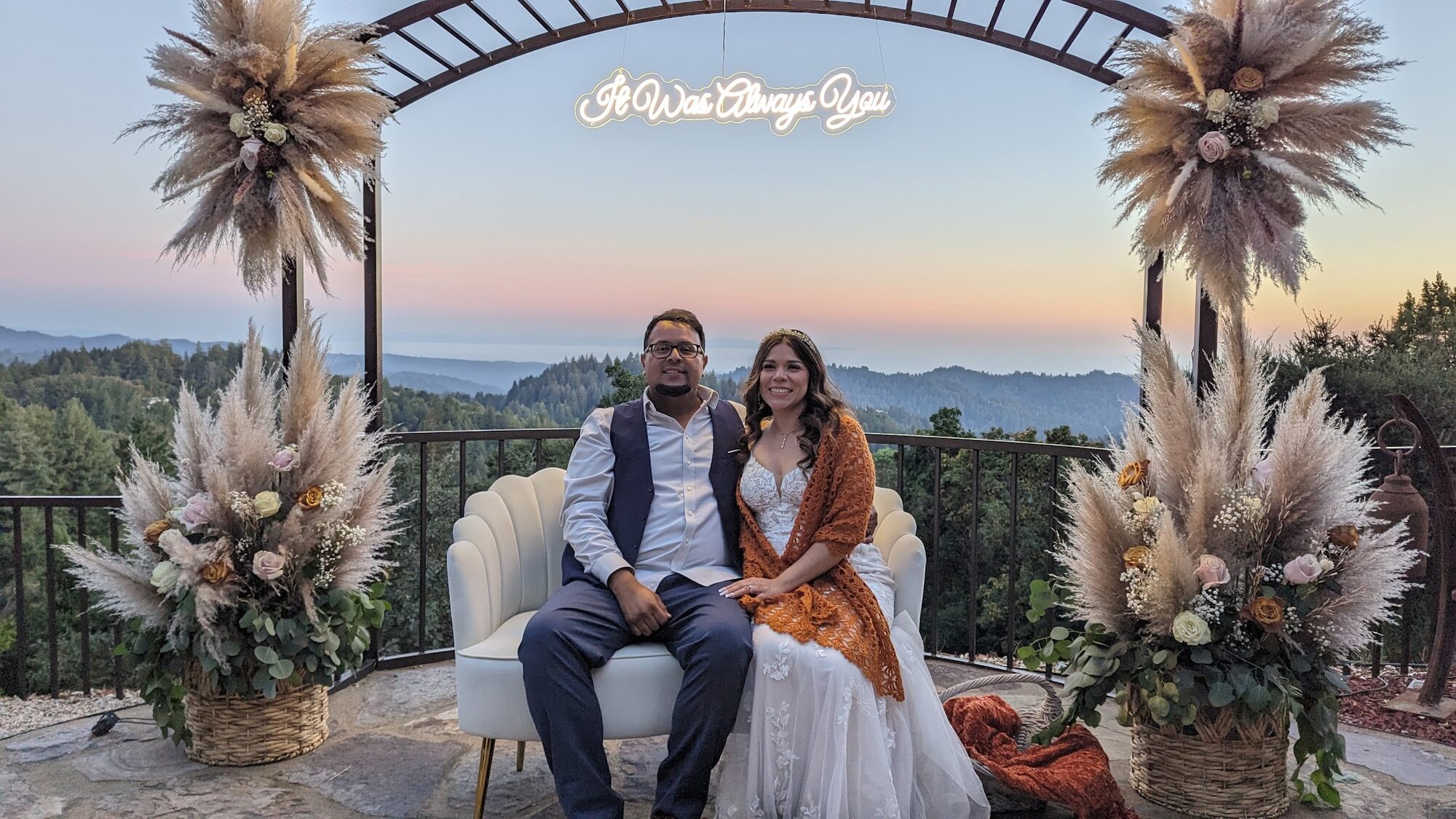
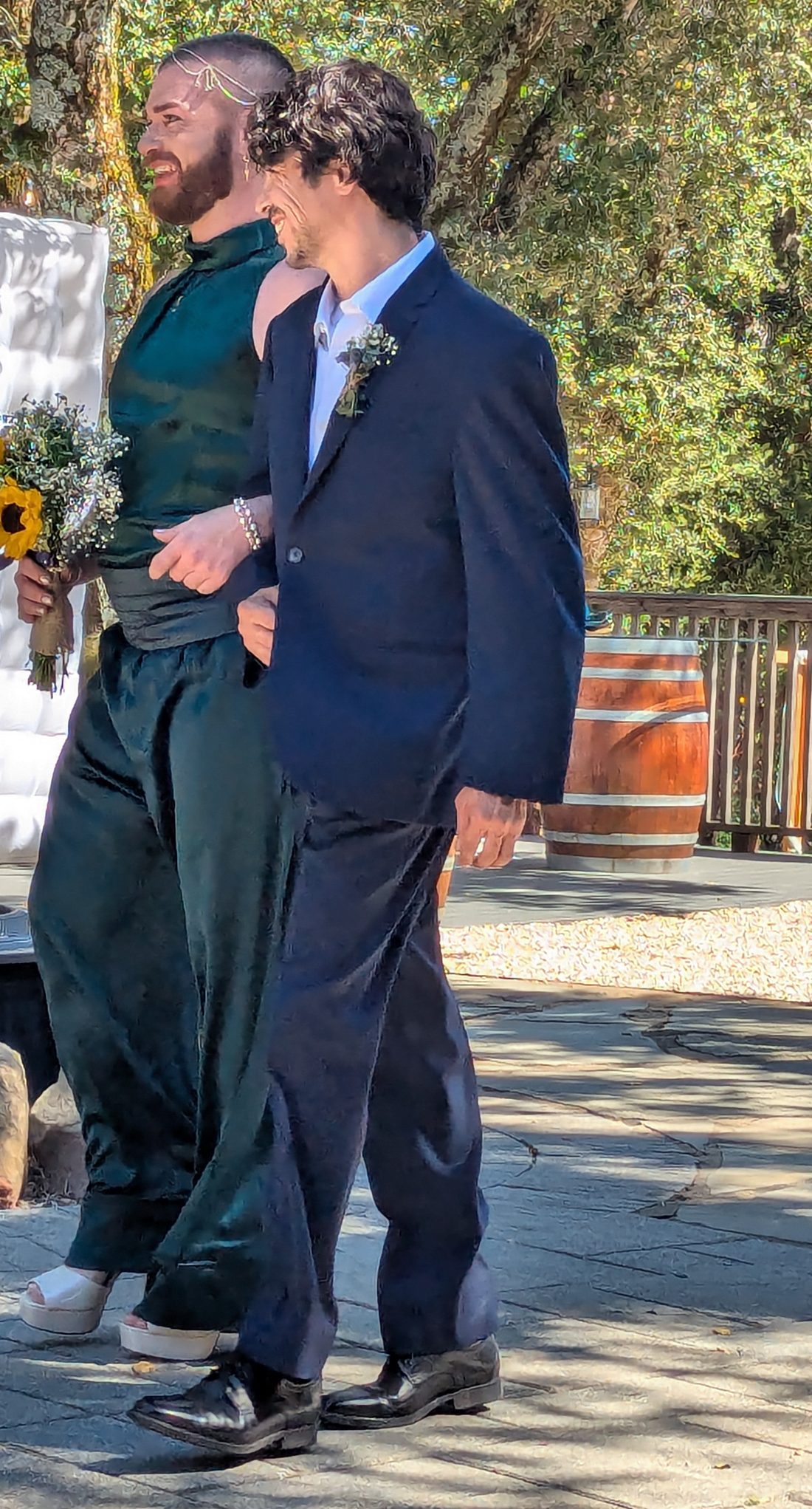
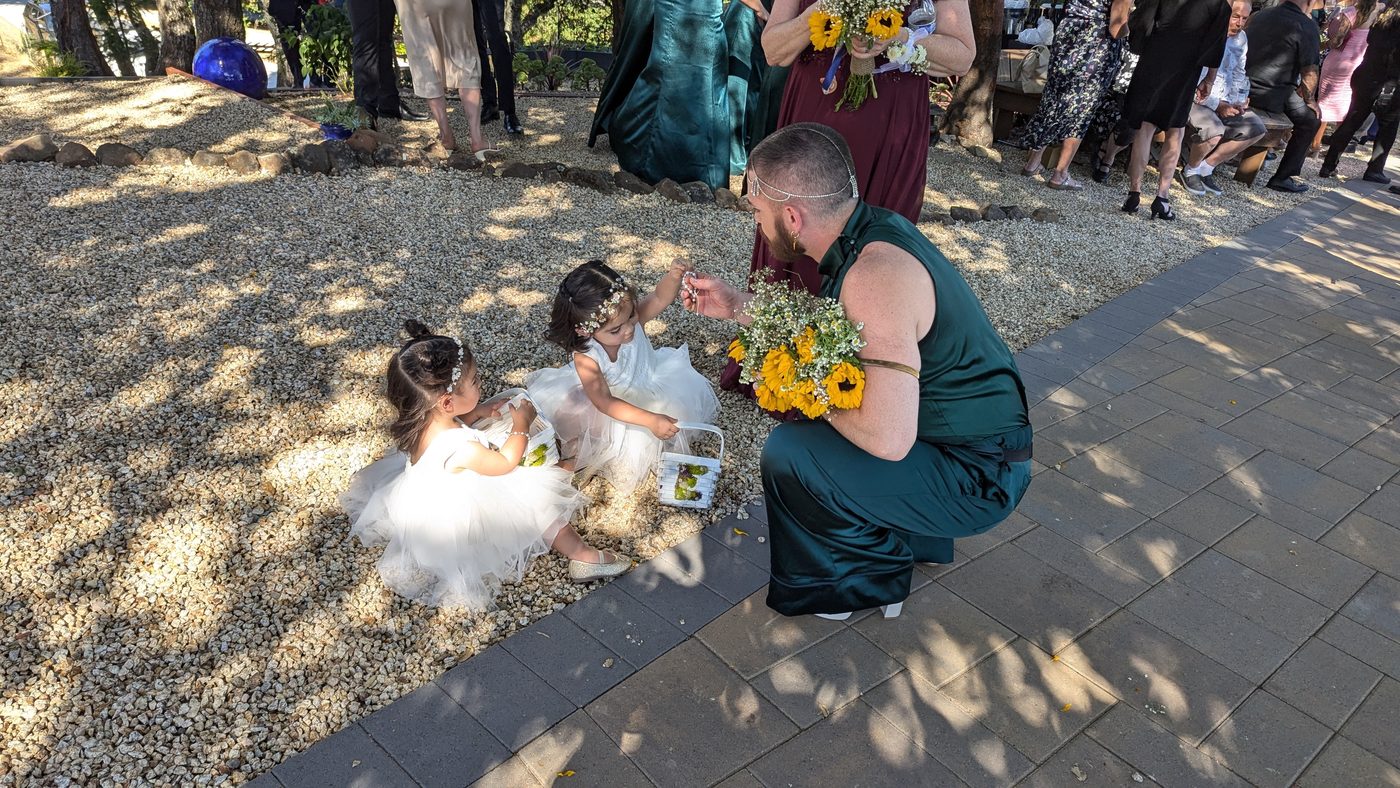
These are from weddings held here. No stock photography, no staging.
Come See It for Yourself
The most reliable way to know whether a venue is right for you is to stand in it. Schedule a tour and we will walk the property with you, talk through what you are imagining, and answer whatever you want to ask. No pitch, no pressure.
You are welcome here, and we would be glad to meet you.